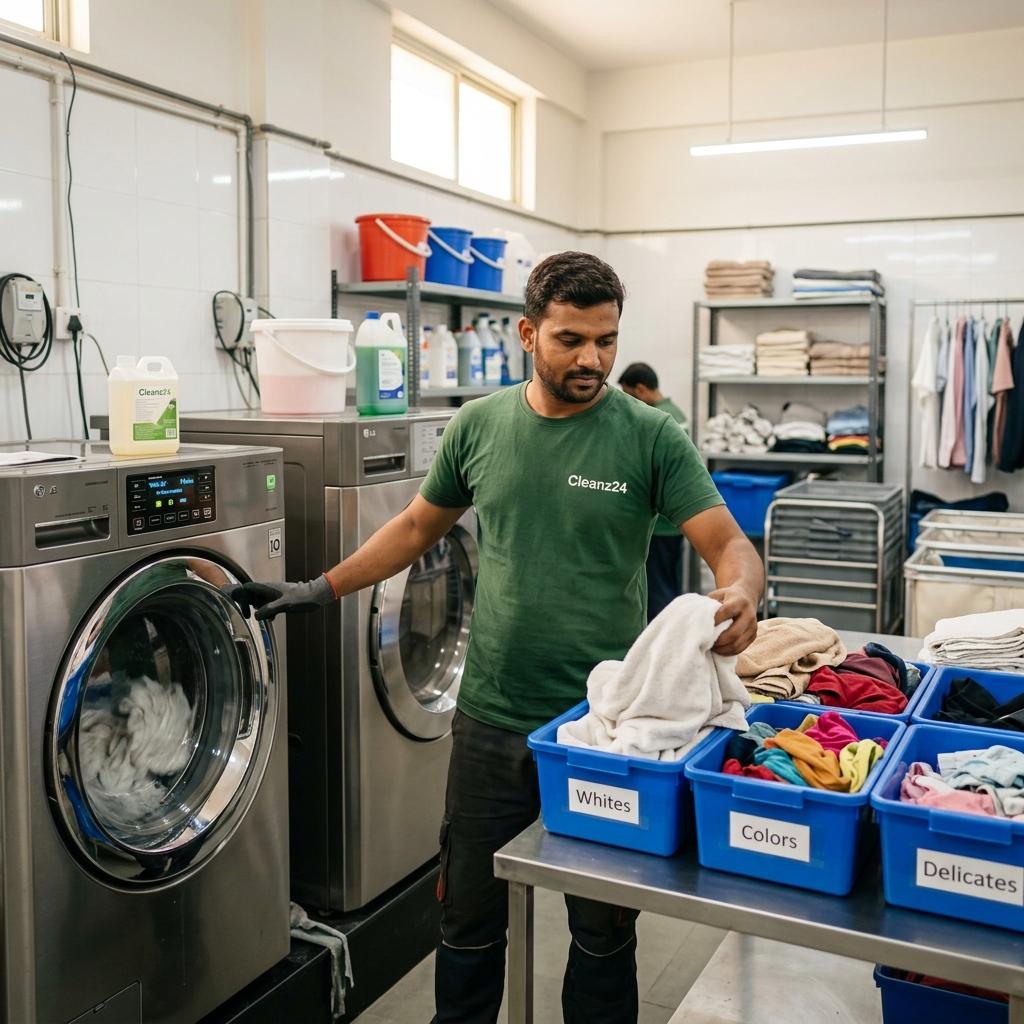
Washing clothes correctly is a skill — and like any skill, it can be done well or done poorly. For laundry workers and professionals, understanding the right process for each type of garment is the difference between clothes that come back looking brand new and clothes that come back damaged, faded, or still dirty.
This guide covers everything you need to know — from sorting and pre-treatment to washing, drying, and finishing — so you can handle any garment with confidence and efficiency.
Step 1: Sort Before You Start
Sorting is the most important step in laundry and the one most often skipped. Always sort garments into separate groups before washing:
Sort by Colour
- Whites — white shirts, white undergarments, white towels
- Lights — pale pink, light blue, cream, light grey
- Darks — black, navy, dark brown, dark green
- Brights — red, orange, bright yellow, bright green
New or dark-coloured garments bleed dye, especially in warm water. Washing a red kurta with white shirts will turn the shirts pink. Always separate.
Sort by Fabric Type
- Heavyweights — jeans, towels, bed sheets, heavy cotton
- Mediumweights — regular cotton shirts, trousers, kurtas
- Delicates — silk, chiffon, georgette, lace, wool, embroidered garments
Heavy items tumbling against delicate fabrics in the drum cause fabric tearing, pilling, and damage. Never mix them.
Always Check the Care Label
Every garment has a care label sewn inside it. Before washing anything, check it. Key symbols:
- 🪣 Tub with water + temperature number = Machine wash at that temperature
- 🪣 Tub with hand = Hand wash only
- ⭕ Circle = Dry clean only — do NOT wash with water
- ❌ X through tub = Do not wash (dry clean only)
- 🔲 Square with circle inside = Tumble dry safe
- ❌🔲 X through square = Do not tumble dry
If the label says "Dry Clean Only" — set it aside. Never put it in the wash.
Step 2: Pre-Treat Stains Before Washing
Pre-treating stains before the wash cycle dramatically improves results. Always treat stains before loading the machine — not after.
- Oil and grease stains — apply a small drop of dish soap directly onto the stain, work in gently with fingers, leave for 5–10 minutes
- Mud and dirt — let it dry completely first, then brush off excess before treating
- Tea, coffee, and food stains — rinse with cold water from the back of the fabric, apply mild detergent
- Sweat and collar stains — apply a paste of baking soda and water, leave 15 minutes
- Blood stains — use cold water only (never hot — heat sets blood permanently)
- Ink stains — dab with rubbing alcohol using a cotton ball, blot don't rub
Golden rule: Always blot — never rub. Rubbing spreads the stain deeper into the fabric fibres.
Step 3: Load the Machine Correctly
How you load the washing machine directly affects how clean clothes come out.
- Don't overload — clothes need space to move freely in the drum. A drum that's too full means poor agitation and poor rinsing. Fill the drum to about ¾ capacity maximum
- Don't underload — very small loads are wasteful (water, electricity, detergent) and create imbalance during spin cycles
- Turn dark clothes inside out — this protects the outer surface from friction fading
- Use mesh laundry bags for delicates — bras, lace, small embroidered items should go in a mesh bag to prevent snagging and tangling
- Check pockets — tissues left in pockets will disintegrate and cover all the clothes in white fluff. Keys and coins damage the drum
Step 4: Use the Right Amount of Detergent
Using too much detergent is one of the most common laundry mistakes — and it makes clothes less clean, not more.
- Excess detergent creates too many suds that the machine can't fully rinse away
- Detergent residue left in fabric attracts more dirt and makes clothes feel stiff
- In monsoon or humid conditions, detergent residue causes that musty, sour smell
Rule of thumb: Use the amount printed on the detergent packaging. For front-loading machines, use less — they use significantly less water than top-loaders.
Choosing the Right Detergent
- Regular cotton and synthetic loads — standard liquid or powder detergent
- Delicates (silk, wool) — mild, pH-neutral detergent labelled "gentle" or "delicate wash"
- White clothes — detergent with optical brighteners, or add half a cup of white vinegar to the rinse
- Baby clothes and sensitive skin — fragrance-free, hypoallergenic detergent only
- Dark clothes — detergent specifically for darks (helps prevent colour fading)
Step 5: Select the Right Water Temperature and Wash Cycle
Temperature selection is critical. The wrong temperature can shrink, fade, or permanently damage garments.
| Temperature | Best For | Avoid For |
|---|---|---|
| Cold (20–30°C) | Darks, brights, delicates, lightly soiled items, synthetics | Heavily soiled items, towels needing sanitisation |
| Warm (30–40°C) | Everyday cotton, moderately soiled clothes, most regular laundry | Silk, wool, embroidered fabrics |
| Hot (60°C+) | White cotton, heavily soiled work clothes, towels, bedsheets (sanitisation) | Coloured clothes, synthetic fabrics, delicates, wool, silk |
Wash Cycle Settings
- Normal / Cotton cycle — for regular cotton and sturdy fabrics. Uses strong agitation and high spin speed
- Delicate / Gentle cycle — for silk, wool, lace, and embroidered garments. Slow agitation, low spin speed
- Quick / Express cycle — for lightly soiled clothes that just need a refresh. Not suitable for heavily soiled items
- Heavy duty cycle — for jeans, towels, and heavily soiled work clothes
- Spin only — use this to extract extra moisture from already-washed items, especially useful in monsoon season
Step 6: Hand Washing Delicates
Some garments should never go in the machine. Hand washing is the correct method for:
- Silk sarees, dupattas, and blouses
- Fine wool and cashmere
- Heavily embellished or embroidered garments
- Garments with "Hand Wash Only" care labels
Correct Hand Washing Technique:
- Fill a clean basin with cool or lukewarm water — never hot for delicates
- Add a small amount of mild, gentle detergent and dissolve fully
- Submerge the garment and gently swish — do not scrub, twist, or wring
- Let it soak for 5–10 minutes
- Drain and rinse with clean cool water until all soap is gone
- To remove water: gently press the garment against the side of the basin — never twist or wring, which distorts the fabric
- Lay flat on a clean, dry towel, roll the towel up with the garment inside, press gently to absorb moisture
- Unroll and air dry flat on a clean surface or hang on a padded hanger
Step 7: Drying Clothes Correctly
Improper drying is the most common cause of shrinkage, shape distortion, and colour fading. Follow these rules:
Machine Drying
- Use the appropriate heat setting for the fabric — most clothing should be dried on medium or low heat, never high
- Remove clothes promptly when the cycle ends — leaving in the drum causes new wrinkles
- Never tumble dry wool, silk, embroidered garments, or anything labelled "Do Not Tumble Dry"
- Add a dry towel to the drum when drying heavy items like jeans — it absorbs moisture and speeds up drying time
Air Drying
- Hang clothes inside out to protect colours from UV fading in direct sunlight
- Use wide, padded hangers for shirts and jackets — wire hangers leave marks and distort shoulders
- Hang trousers from the waistband, not folded over a line — this prevents a permanent crease across the leg
- Shake garments before hanging to remove wrinkles and restore shape
- In monsoon/humid conditions: dry indoors with a fan pointed at the clothes, or use a dehumidifier
Step 8: Finishing — Ironing and Folding
A well-washed garment that's poorly finished still looks bad. The final step matters.
Ironing Tips for Laundry Workers
- Always iron clothes while slightly damp — it's far easier and gives a better result. Use a spray bottle of water if needed
- Iron on the correct setting for the fabric (low for synthetic/silk, medium for cotton/linen, high for heavy cotton)
- Iron inside out for dark clothes and embroidered/embellished garments
- Use a pressing cloth (a thin white cloth placed between the iron and garment) for delicate fabrics — it prevents shine and scorch marks
- Iron collars first, then cuffs, then sleeves, then body — always work from smaller sections to larger ones
- Never iron over stains — heat will permanently bond the stain to the fabric
Folding for Storage
- Fold clothes immediately after drying to prevent new wrinkles setting in
- Hang formal wear (suits, shirts, sarees, dresses) — don't fold if avoidable
- Use the KonMari fold (stand upright in drawer) for t-shirts and casual wear — saves space and lets you see everything at once
Common Laundry Worker Mistakes to Avoid
- ❌ Mixing colours and whites — always sort before washing
- ❌ Using too much detergent — more soap does not mean cleaner clothes
- ❌ Hot water on all fabrics — always check the care label for temperature
- ❌ Overloading the machine — clothes need room to agitate and rinse properly
- ❌ Leaving wet clothes in the machine — even 1 hour can develop mould and musty smell
- ❌ Forgetting to check pockets — tissues, coins, and keys cause real damage
- ❌ Wringing delicate fabrics — press gently, never twist
- ❌ Ironing stained clothes — always treat stains before ironing
- ❌ Drying dark clothes in direct sunlight — UV causes rapid colour fading
Professional Efficiency Tips
If you're handling multiple loads as part of a professional laundry operation, these habits will save you time and improve quality:
- 🏷️ Tag and track every order — use labels or tags to keep each customer's clothes together through the entire wash-dry-fold cycle
- ⏱️ Use multiple machines in parallel — while one load washes, start another drying, and finish/fold a third
- 🧴 Pre-dissolve detergent in a small amount of water before adding to the machine for faster, more even distribution
- 🌬️ Set timers on dryers — over-drying damages fabric fibres and wastes energy. Remove clothes while still slightly warm
- 🗂️ Batch similar fabrics — processing all cottons together, all delicates together, etc. saves time on settings adjustments
- 📋 Do a final quality check before returning — inspect for missed stains, loose buttons, and proper folding/hanging
Why Training Matters in Professional Laundry
Knowing these techniques is what separates a skilled laundry professional from someone just "doing the washing." Customers trust professionals with their most valuable garments — silk sarees, designer suits, embroidered ethnic wear — and they expect them back in perfect condition.
A single damaged garment due to wrong temperature, wrong cycle, or improper handling can undo weeks of customer trust. The best laundry professionals are thorough, methodical, and never cut corners.
Work with Cleanz24 — India's Leading Professional Laundry Brand
At Cleanz24, our trained laundry specialists follow a strict quality process for every single garment. From the moment it arrives to the moment it's returned — every step is handled with expertise and care.
- ✅ Garment-by-garment sorting and pre-inspection
- ✅ Fabric-specific wash programs and water temperatures
- ✅ Eco-friendly, skin-safe detergents
- ✅ Industrial pressing and professional finishing
- ✅ Final quality check before every delivery
Whether you're a customer looking for the best laundry care, or a laundry professional looking to grow your career — Cleanz24 is where standards are set.